Life Cycle of the Joro Spider
Easily confused with Banana Spider (Trichonephila clavipes) and the Yellow Garden Spider (Argiope aurantia)
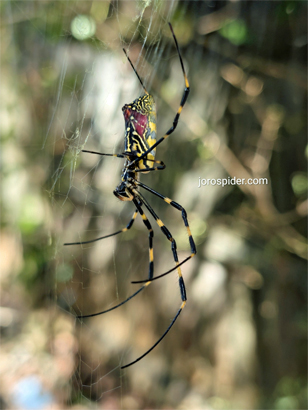
Why does it seem as if there are so many Joro spiders in the late fall?
Because they are especially prevalent in the fall, it seems like Joro spiders might be aggressively taking over other orb spiders, but their seasons don’t quite overlap. It’s no help people mis-identify the spiders. Here’s the skinny on these chubby spiders.
Do banana spiders, yellow garden spiders, and Joro spiders have the same life cycle and season in the United States?
Not quite. The life cycles and seasons for adult activity are not exactly the same for the banana spider, yellow garden spider, and Joro spider in the United States, although they share a general pattern as annual orb-weavers.
The key differences are in the timing of their maturity, egg hatching, and cold tolerance.
- All three species have a roughly one-year life cycle in which the adults appear in late summer/fall, reproduce, and then die with the first hard frost/freeze.
- The yellow garden spider and banana spider are most conspicuous in late summer/early fall.
- The Joro spider tends to be noticed later in the year, with females laying eggs in late fall/early winter, and the adults often surviving later into the colder months than the others, especially in the Southeast.
- All three species overwinter as eggs/spiderlings inside a protective egg sac, which then hatch and emerge the following spring to grow throughout the summer.
| Feature | Banana Spider (Trichonephila clavipes) | Yellow Garden Spider (Argiope aurantia) | Joro Spider (Trichonephila clavata) |
| Typical Life Cycle Length | About one year (annual) | About one year (annual) | About one year (annual) |
| Season (Most VisiAdultble) | Late summer and fall (prefers warmer, southern climates) | Late summer and early fall | Late summer, fall, and sometimes into early winter (known for later-season activity) |
| Egg Laying | Late summer to fall | Late summer to early fall (September) | Late fall (November) or early winter, often before the first hard freeze |
| Overwintering Stage | Eggs in a sac | Spiderlings remain inside the egg sac | Spiderlings remain inside the egg sac |
| Egg Hatching/Emergence | Eggs hatch in autumn, spiderlings overwinter in sac, emerging in spring (varies with location) | Eggs hatch in fall, but spiderlings emerge from the sac the following spring | Eggs hatch in late April to early May, or emerge in spring |
| Geographic Range | Warmer regions, primarily the Southeast (Gulf states, up to North Carolina and Texas) | Throughout the contiguous United States, Southern Canada, and Mexico (more widespread) | Currently spreading in the Southeastern US (GA, SC, TN, NC) but with greater cold tolerance than the banana spider, potentially spreading North. |
The Stuff of Nightmares or Gardens?
Maybe both. As you learn more, the nightmares will disappear.
See our sponsors: American Speechwriter and Tree Fort Books


© Copyright 2026 All Rights Reserved. JoroSpider.com
This site may contain affiliate links so I earn a commission.
Read: The Raging Giant Blue Goldfish - 22 Short Stories